TRIGA® Advantages
Engineering What Endures – From TRIGA® to Tomorrow
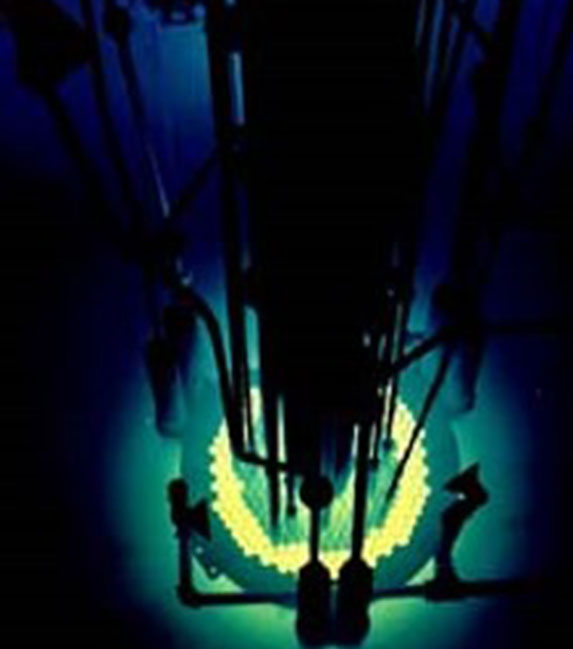
The demonstrated advantages of TRIGA® fuel over other fuels used in research and test reactors include:
- Inherent Safety Through Unique Fuel Behavior
The uranium zirconium hydride (UZrH) fuel used in TRIGA reactors operates on the warm neutron principle, which provides a prompt negative temperature coefficient of reactivity. Unlike aluminum-clad plate-type fuels, which exhibit a delayed response, TRIGA fuel immediately reduces reactivity as temperature rises. This feature allows TRIGA reactors to safely withstand transient events that could compromise the integrity of plate-type fuel cores. - Superior Thermal Stability
UZrH fuel is chemically stable and can be safely quenched in water at temperatures up to 1,200°C. In contrast, aluminum-clad plate-type fuel undergoes destructive exothermic reactions with water at approximately 650°C, posing significant safety risks. - Robust Cladding Performance
TRIGA fuel uses stainless steel or Alloy 800 cladding, which maintains structural integrity at temperatures as high as 950°C. Plate-type fuel, with aluminum cladding, melts and fails at around 650°C, limiting its resilience under high-temperature conditions. - Exceptional Fission Product Retention
UZrH fuel retains over 99% of volatile fission products at 650°C, even if the cladding is compromised. By comparison, plate-type fuel melts at this temperature and releases nearly all of its volatile fission product inventory, increasing radiological risk. - Proven Legacy of Safe Operation
The prototype TRIGA Mark I reactor was commissioned at General Atomics on May 3, 1958. Initially licensed at 10 kilowatts, it was soon upgraded to 250 kilowatts and demonstrated the ability to safely “pulse” to over 1,000 megawatts. This rapid, self-limiting power excursion—enabled by the fuel’s prompt negative temperature coefficient—returns the reactor to safe operating levels within milliseconds, without external intervention. The original TRIGA operated successfully until 1997 and was designated a nuclear historic landmark for pioneering inherently safe reactor technology. - Pulsing Capability for Advanced Testing
The pulsing feature first demonstrated in the TRIGA Mark I is now standard in many TRIGA reactors. Specialized pulsed TRIGA designs in use today routinely reach peak power levels of up to 22,000 megawatts for brief durations, enabling rigorous testing of nuclear fuel safety and behavior. - Safety Without Costly Containment Structures
Thanks to the unique safety characteristics of UZrH fuel, TRIGA reactors do not require the expensive pressure containment buildings mandated for aluminum-clad plate-type fuel reactors. Many TRIGA systems are housed in existing buildings on university campuses and even in hospitals, demonstrating their adaptability and safety. - Reduced Environmental Impact
TRIGA fuel offers extended operational life, typically lasting three to four times longer than other research reactor fuels. As a result, TRIGA reactors generate significantly less spent fuel—only one-third to one-fourth as much over a given period. This reduces the volume of fuel stored onsite, minimizes transportation over public highways, and lowers the burden on long-term waste disposal or reprocessing systems.