Advanced Terrestrial Reactors
 Proven Designs. Modern Performance. A Safer Energy Future
General Atomics Electromagnetic Systems (GA-EMS) designs advanced nuclear reactors guided by three core principles: safety, economic competitiveness, and waste minimization. As a pioneer in nuclear innovation since 1955, GA-EMS continues to lead the development of commercial terrestrial systems that deliver resilient, scalable energy for communities, remote sites, and specialized missions.
Building on decades of expertise in high-temperature, gas-cooled reactor technologies—including legacy systems like Peach Bottom and Fort St. Vrain, developed through Department of Energy-supported initiatives—GA-EMS has created a next-generation reactor family: the Energy Multiplier Module (EM2), Fast Modular Reactor (FMR), and Thermal Gas Reactor (TGR). These advanced systems integrate modern performance with proven design foundations to ensure long-term operation and siting flexibility without reliance on large water sources.
Fort St. Vrain, located in Platteville, Colorado, was the first commercial high temperature gas cooled reactor (HTGR) in the United States and is no longer in operation. Its successful core design serves as the basis for GA-EMS’ reactor philosophy and engineering practices, shaping solutions that meet today’s energy challenges.
To support high-efficiency installations across defense, remote, and off-grid environments, GA-EMS also offers compact 5–10 MWe reactor options engineered to provide reliable baseload power with exceptional resilience.
As global energy needs evolve, GA‑EMS is advancing next‑generation fuel cycle technologies —bringing safe, efficient, and adaptable nuclear power into a new era.
Safety
- Inherently Passive Safety Systems: Ensures safe shutdown without reliance on power supplies
- Chemically-Inert Coolants: Utilizes coolants that do not cause corrosion and enable higher temperatures and efficiency
- Flexible Siting Capability: Supports installation in remote locations without need for a water source
Cost Competitiveness
- Optimized Fuel Utilization: Delivers high burnup and fuel efficiency to reduce operating costs over the reactor lifecycle
- Modular, Transportable Construction: Factory-fabricated assemblies are sized for truck or rail transport, minimizing on-site labor and complexity
- Expedited Construction Timeline: Shorter build schedules compared to conventional large-scale reactors accelerate the path to revenue
Minimization of Waste
- Lower Waste Profile: Produces significantly less waste than traditional light water reactors and fast reactors can eliminate long-lived radioactive waste
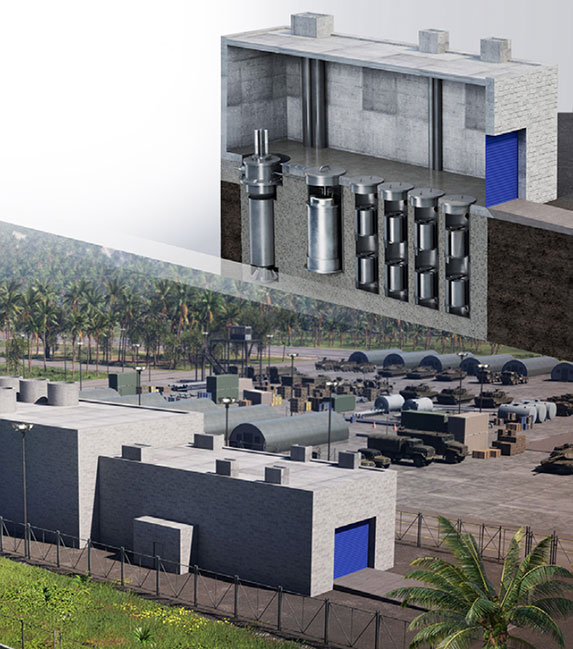
GA Tactical Energy System (GA-TES)
Liquid Metal: Enables efficient convective cooling with no moving parts
From Arctic research stations to remote island grids to operational military installations, our microreactor is purpose-built for locations where traditional energy sources fall short.
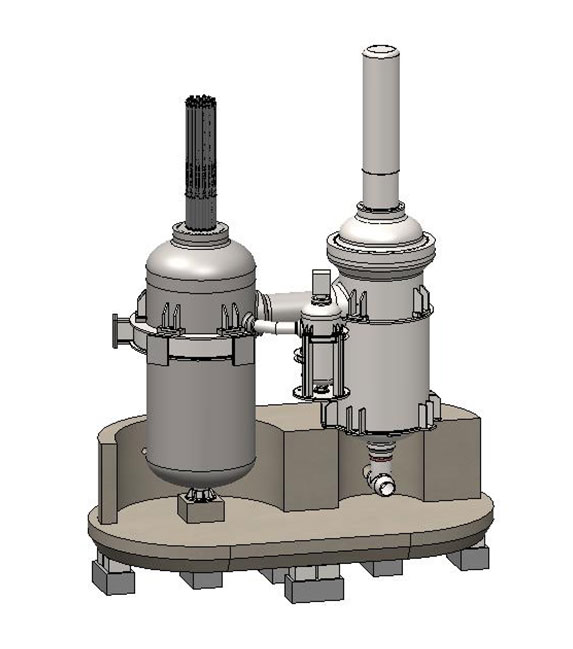
Thermal Gas-Cooled Reactor
Helium Thermal: Extracts more energy, more efficiently than light water reactors
Unlike experimental or hard-to-source fuels, this reactor uses off-the-shelf UO₂ fuel enriched to 5%, a form widely produced, shipped, and qualified in today’s commercial nuclear industry. This dramatically shortens deployment timelines, reduces risk, and ensures regulatory confidence.
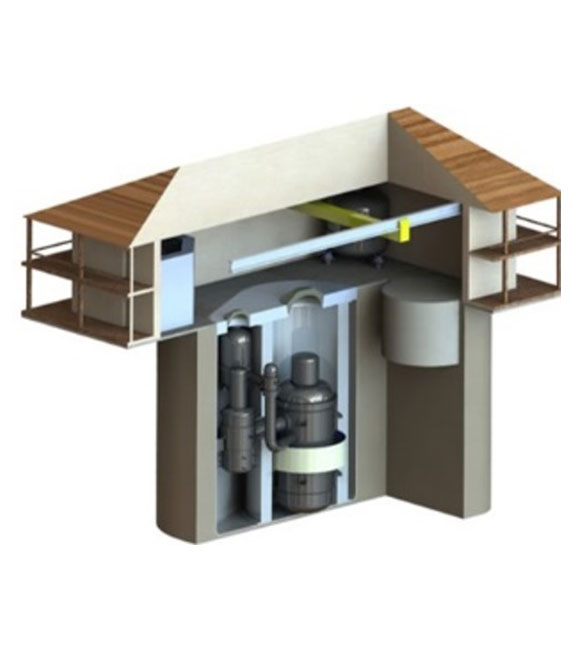
Gas-Cooled Fast Modular Reactor
Helium Fast: Uses existing UO2 fuel or nuclear reactor waste as fuel
General Atomics Electromagnetic Systems’ (GA-EMS) Fast Modular Reactor (FMR) is a 44-megawatt electric (MWe) advanced high- temperature gas-cooled fast neutron reactor. Designed for flexibility and resilience, the FMR can be distributed and sited in remote or resource-constrained locations.
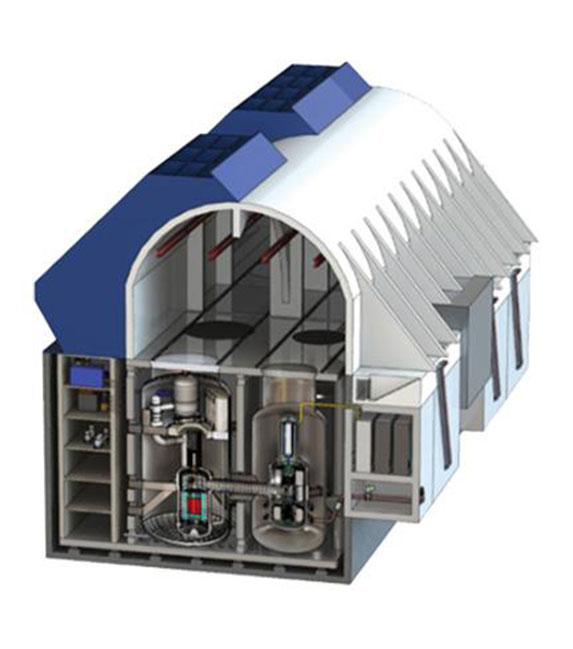
Energy Multiplier Module (EM2)
Helium Fast: Converts fertile fuel to fissile fuel and burns it in place
The Energy Multiplier Module (EM2) is a next-generation, 265-megawatt electric (MWe) gas-cooled small modular reactor. Its fast neutron spectrum enables closure of the fuel cycle and transmutation of high-level waste.