General Atomics Tactical Energy System
Resilient Power Where the Mission Requires
National security depends on military installations sustaining operations when severe weather, physical damage or cyber incidents disrupt the grid.
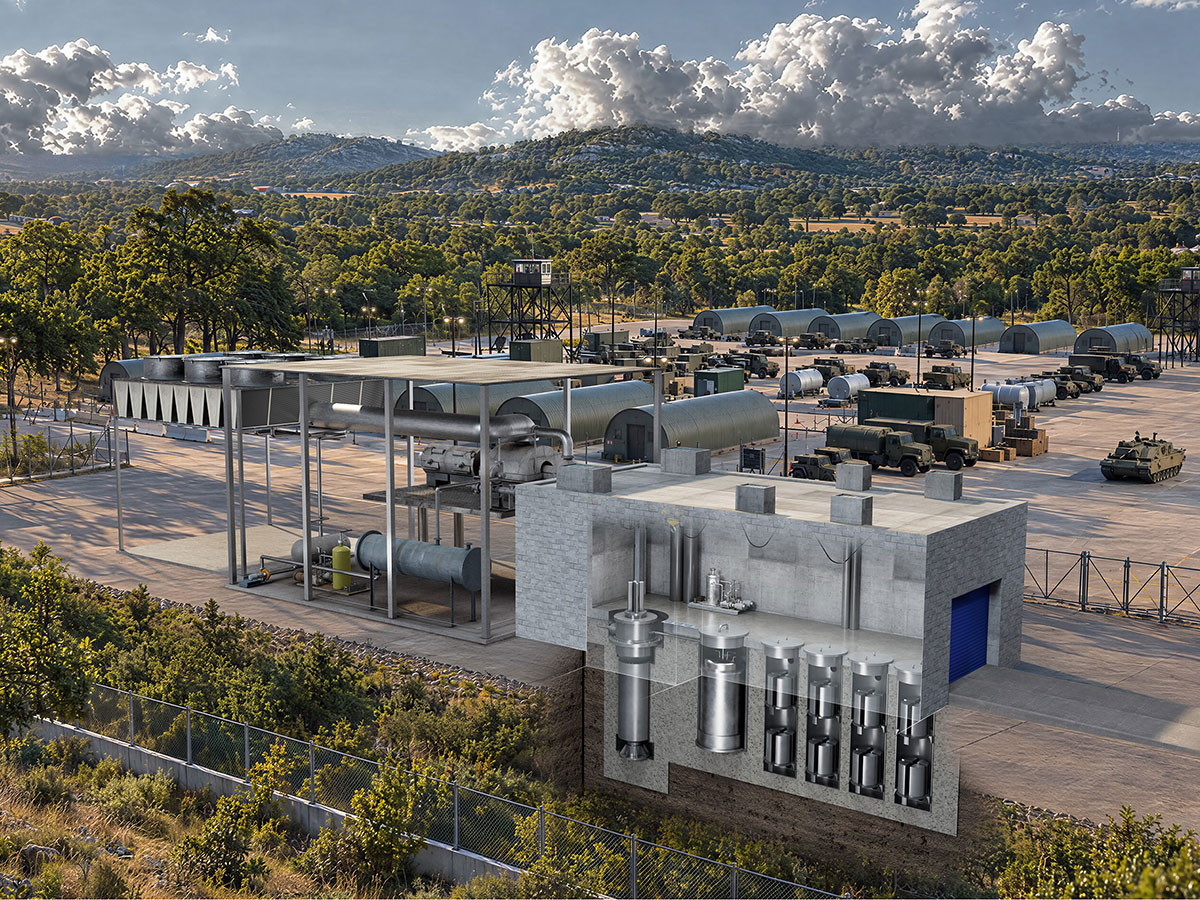
Built on General Atomics' more than 70 years of nuclear reactor and fuel innovation, the General Atomics Tactical Energy System (GA-TES) is a microreactor that draws on the operating legacy of globally deployed TRIGA® research reactors and GA's uranium-zirconium hydride (UZrH) fuel technology.
GA-TES integrates reactor and plant design, nuclear systems engineering, and fuel development and fabrication to deliver resilient energy for mission-critical operations.
Selected as one of five industry partners for the U.S. Army's Janus Program, GA-TES is designed to provide continuous, resilient baseload power for defense installations and infrastructure, supporting sensing, communications, command and control, and other essential capabilities during grid disruptions in remote, austere and contested environments. During a station blackout, its passive systems are designed to maintain safe fuel and coolant temperatures without operator action or safety-related AC power for shutdown cooling.
Power Matched to the Mission
GA-TES can provide a baseline net output of approximately 5 megawatts electric (MWe), with an architecture scalable to approximately 20 MWe without changing its inherent and passive safety approach. This allows planners to match generation capacity to critical mission needs and integrate GA-TES with the site's existing power system.
Flexible Deployment and Siting
GA-TES' air-cooled power-conversion system avoids the need for large cooling-water systems, giving the Army more options for installing dependable generation where water is scarce. This flexibility supports critical missions at remote installations and other sites where limited water infrastructure can constrain energy options.
GA-TES' modular design supports factory assembly and testing before components are shipped by truck or rail for on-site installation. Its plant life up to 40 years supports long-term infrastructure planning as mission needs evolve. In its initial configuration, GA-TES is designed to operate for up to five years continuously before refueling, reducing the need for recurring fuel deliveries.
Inherent Fuel Safety and Passive Cooling
GA-TES' UZrH fuel technology features a safety response built into the fuel itself. As fuel temperature rises, this response automatically reduces the fission chain reaction, helping limit further heating without requiring operator action or electrical power.
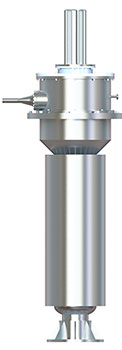
Natural circulation moves lead coolant without primary coolant pumps, reducing associated maintenance requirements. Passive air cooling around the reactor vessel removes residual heat after shutdown.
| TECHNICAL SPECIFICATIONS | |
|---|---|
| Reactivity Response | Strong prompt negative temperature feedback inherent to UZrH fuel reduces reactor power as fuel temperature rises |
| Primary Cooling | Low-pressure, pool-type lead system uses natural circulation during normal operation and shutdown; no primary pumps or external primary piping |
| Passive Station-Blackout Safety | Passive systems maintain safe fuel and coolant temperatures without operator action or safety-related AC power for shutdown cooling |
| Primary System | No coolant pumps; natural circulation provides heat transport during normal operation and shutdown |
| Decay Heat Removal | Fully passive air cooling around reactor vessel rejects decay heat to the atmosphere |
| Coolant Behavior | High-thermal-conductivity lead distributes heat to mitigate localized freezing; supplemental internal and external heaters support cold-start and low-afterheat conditions |
| Fuel | UZrH using high-assay low-enriched uranium (HALEU) |
| Core Life | Up to five years of continuous operation in the baseline configuration |
| Plant Design Life | Up to 40 years |
| Operating Concept & Controls | Digital instrumentation and controls support plant monitoring, oxygen control and lead transfer for minimally attended operation |
| Operating Mode | Continuous baseload operation |