TRIGA® History
Engineering What Endures – From TRIGA® to Tomorrow
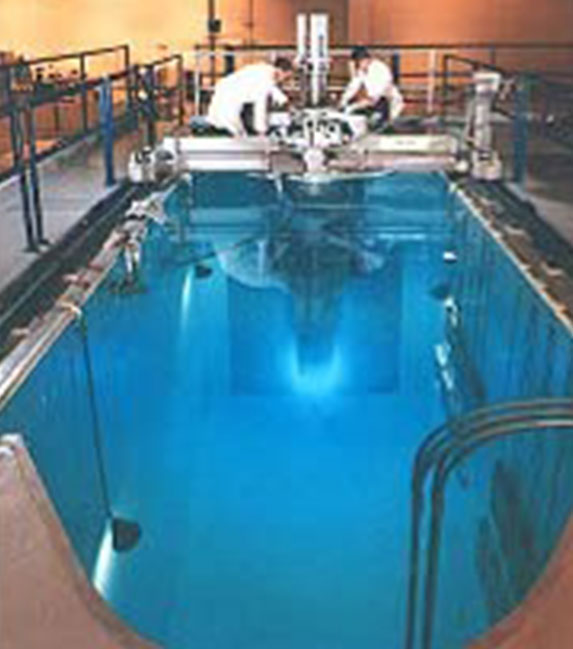
General Atomics’ GA TRIGA® nuclear reactor program has a legacy spanning more than 70 years in the design and operation of safe, reliable research reactors. TRIGA is the most widely used research reactor in the world, with 66 facilities built across 24 countries on five continents. These reactors have been deployed in a range of configurations and capabilities, with steady-state power levels from 20 kilowatts to 16 megawatts.
TRIGA is the only reactor in its class to offer true inherent safety—a design feature rooted in the physical behavior of its fuel—rather than relying solely on engineered safety systems. This distinction allows TRIGA reactors to self-regulate during power excursions, providing unmatched protection against accidents.
In the 1950s, GA pioneered the development of fuel rods containing hydrogen by alloying uranium and zirconium metal. The resulting uranium-zirconium-hydride (UZrH) fuel was both mechanically robust and highly corrosion resistant. In the 1980s, this innovation was extended with the development of low-enriched, proliferation-resistant UZrH fuels for higher-power TRIGA reactors.
This fuel design continues to provide the highest degree of safety across all power levels. While safety-related incidents have occurred at some research reactors worldwide, TRIGA reactors have maintained an unblemished safety record—thanks to the self-limiting behavior of UZrH fuel and the reactor’s inherently safe design.