Space Nuclear Power and Propulsion
Reliable Power. Relentless Propulsion.
Solar power fades in shadowed craters and distant orbits. Chemical propulsion has limited burn and would necessitate refueling. Nuclear systems offer what others cannot: sustained power, high-efficiency propulsion, and unmatched resilience in extreme environments.
Over 70 years of nuclear innovation to space— delivering safe, robust, and scalable nuclear systems that perform on-orbit and on-time.
Building on our leadership in satellite platforms and advanced space technologies, General Atomics Electromagnetic Systems is making nuclear power and propulsion a reality to advance compact, high-efficiency reactor solutions for cislunar operations and beyond.
Nuclear Thermal Propulsion (NTP)
Efficient transport in cislunar space and beyond
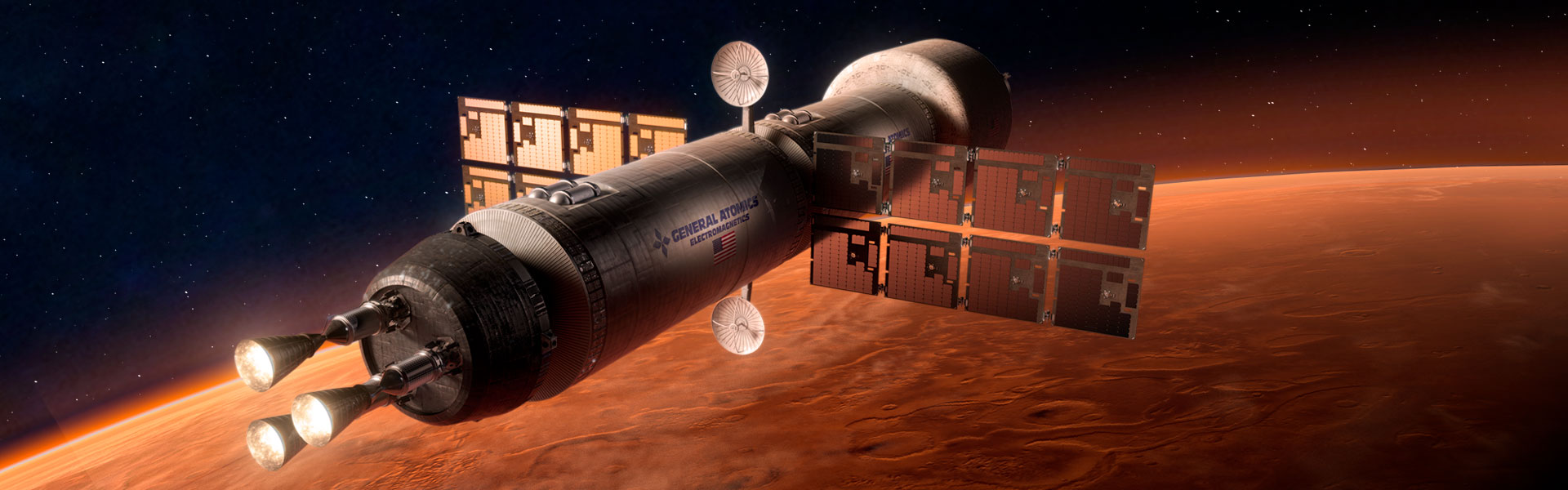
General Atomics Electromagnetic Systems' (GA-EMS) Nuclear Thermal Propulsion (NTP) fuels are setting the standard—proven to withstand high temperature hydrogen exposure and maintain structural integrity under neutron irradiation. These breakthroughs are paving the way for sustained, high performance propulsion across the solar system.
The NTP reactor concept builds on advanced nuclear materials, modern manufacturing techniques, and deep heritage from the company's participation in NASA's Atomic Energy Commission (AEC) Project Rover during the 1960s. During that program, engineers fabricated approximately six metric tons of nuclear fuel kernels, establishing foundational expertise that continues to shape today's designs. GA-EMS has since advanced high performance NTP fuel and core technologies, with materials successfully tested at NASA and national laboratories.
By unlocking a new era of space mobility, GA-EMS aims to enable faster, safer, and more efficient missions beyond Earth's orbit. Nuclear Thermal Propulsion offers two to three times the efficiency of chemical rockets, reducing transit times for deep space missions, minimizing crew exposure to cosmic radiation, and supporting the development of cislunar infrastructure. This capability is essential for advancing U.S. leadership in space exploration and enabling sustained human presence beyond low Earth orbit.
Robust Proven Technologies
- Specific Impulse: ≥ 900 seconds using hydrogen propellant
- Thrust: 57 kN
- Reactor Mass Limit: ≤ 3,500 kg
- Fuel Type: High-Assay Low-Enriched Uranium (HALEU)
- Reliability and Safety: Robust control architectures designed to minimize mission risk
Nuclear Electric Propulsion (NEP)
Propulsion and power for payloads
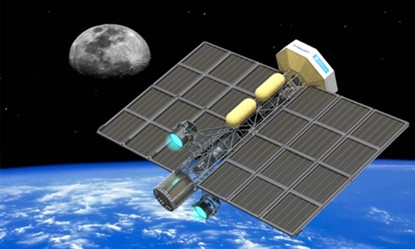
Nuclear energy for power and propulsion is clearly the best technology for missions requiring both high electrical power and thrust. In distinction from radioisotope sources, it can be turned off and run silent, with lifespans of 10 years or more in space. Nuclear electric propulsion enables faster, efficient space travel without the need for multiple refueling operations.
As the space domain grows increasingly contested and commercialized, nuclear power offers strategic advantages in maneuverability, endurance, and operational flexibility.
General Atomics Electromagnetic Systems (GA-EMS) draws from terrestrial reactor technologies to meet the demands of space environments. These innovations support critical NASA and DoD missions, reflecting the company’s enduring focus on protection and defense.
Fission Surface Power (FSP)
Powering space outposts
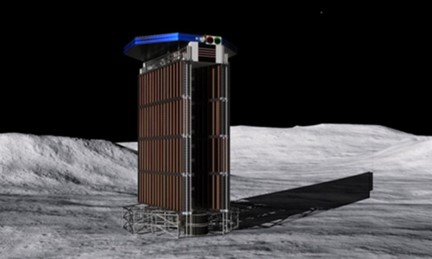
Future missions to the Moon and Mars will be establishing outposts that support human life and supply reliable energy for activities such as mining, water extraction, research and other supporting activities.
Nuclear energy is the most viable power source for these missions, offering high energy density, consistent performance, and the ability to operate independently of sunlight.
With a legacy in nuclear energy, cutting-edge reactor and materials development, and deep experience in space systems, General Atomics Electromagnetic Systems (GA-EMS) is actively exploring technologies to power human outposts on the Moon, Mars, and beyond.