EMALS & AAG
Aircraft Launch & Recovery System
The Electromagnetic Aircraft Launch System (EMALS) and Advanced Arresting Gear (AAG) launch and recover aircraft with unmatched speed, safety, and efficiency. They are best‑in‑class technologies enabling air superiority on America’s most advanced carriers. Built with flexible architecture to drive naval modernization, EMALS and AAG scale across carrier classes and future allied platforms — delivering faster launches, safer recoveries, and operational excellence across every mission profile. From the Ford-class to future international platforms, EMALS and AAG provide the combat‑ready reliability and innovation that keep navies worldwide commanding the seas today, tomorrow, and for generations to come.
Aircraft Launch & Recovery System
- Fleet Scalability
- Adapts across carriers and naval platforms
- Supports allied aircraft operations
- High Operational Tempo
- Enables rapid launch and recovery cycles
- Startup to ready for ops within minutes
- Aircraft Longevity
- Smooth launches reduce airframe stress
- Controlled recoveries extend service life
- Lifecycle Savings
- Lower manning requirements
- Simplified maintenance reduces costs
- Safety & Environment
- Quieter, cooler, safer for sailors
- Precise launches enhance pilot safety
Electromagnetic Aircraft Launch System (EMALS)
EMALS delivers smooth, controlled aircraft launches that extend airframe life and reduce maintenance demands. Powered by a linear induction motor with adjustable thrust, it supports a wide range of carrier‑based aircraft, including emerging lightweight platforms, strike fighters, electronic warfare aircraft, and airborne early warning systems. Its rapid recharge cycle, under one minute, cuts launch times and enables carriers to surge operations whenever mission demands rise, ensuring unmatched efficiency and readiness at sea.

EMALS Key Benefits
- Improves operational reliability and efficiency
- Increases surge capacity and capability
- Launches a wider range of aircraft weights and speeds
- Provides smoother acceleration for airframe and pilot
- Ensures accurate end-speed control
- Reduces manning and lifecycle costs
- Creates a quieter, cooler and safer environment
- One moving part and minimal hydraulics simplify maintenance
- Digital control with intuitive software and faster troubleshooting
Advanced Arresting Gear (AAG)
AAG delivers safe, reliable aircraft recoveries at sea. Its modular, integrated design combines energy absorbers, power conditioning equipment, and a turboelectric system with water turbines and an induction motor to provide controlled deceleration across a broader range of aircraft. Enhanced with digital controls, built‑in diagnostics, and advanced health monitoring, AAG r educes maintenance, manpower, and lifecycle costs while extending aircraft service life. A durable cable and three wire system improve accuracy and pilot safety, while its compact, modular design lowers ship weight, reduces energy consumption, and frees valuable ship space.

AAG Key Benefits
- Improves reliability and safety
- Recovers a wide range of aircraft
- Reduces maintenance and manpower
- Extends aircraft service life
- Reduces ship weight and energy use
- Provides controlled deceleration of aircraft

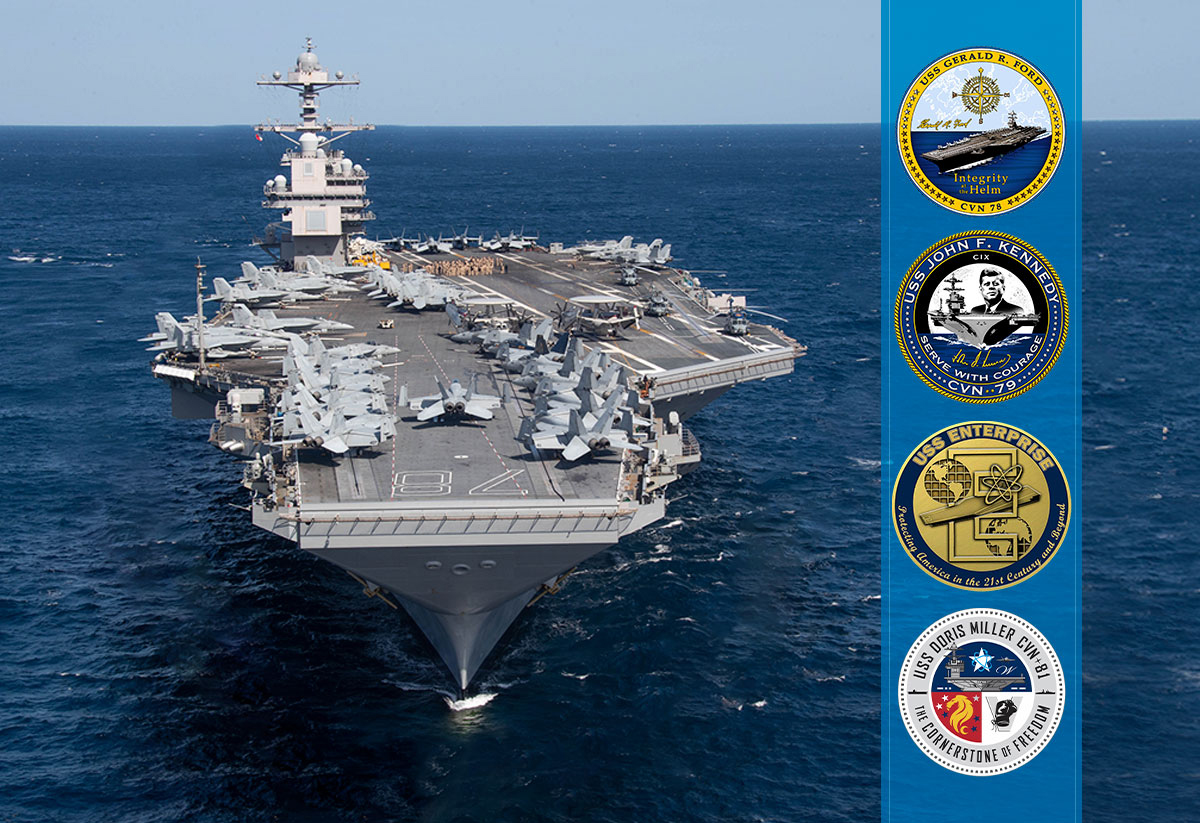
Delivering EMALS & AAG for Ford-class Carriers