GA-ASI Teams With U.S. Navy To Demonstrate Collaborative Autonomous Mission Planning for Simulated Battle
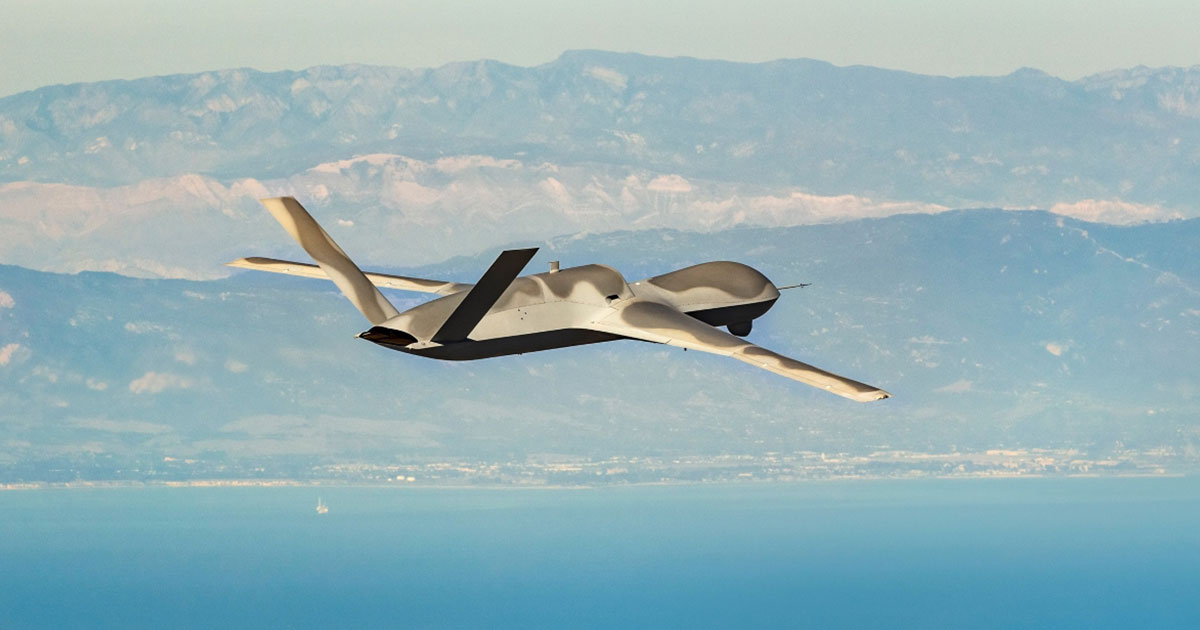
SAN DIEGO — 05 October 2026 — General Atomics Aeronautical Systems, Inc. (GA-ASI) and the U.S. Navy’s Strike Planning and Execution Systems program office (PMX-281) collaborated on a demonstration of collaborative autonomous mission planning using GA-ASI’s MQ-20 Avenger® Autonomous Collaborative Platform (ACP) test aircraft on September 10 from GA-ASI’s Gray Butte Flight Operations Facility near Palmdale, California, and the Mission Operations Center located in Poway, California.
The team extended the Navy’s planning systems with Autonomy Government Reference Architecture (A‑GRA)-compliant mission context. This allows mission autonomy software to understand a human commander’s intent, then exercise autonomous judgment and autonomously coordinate a diverse team of Group 5 uncrewed aircraft with human-crewed teammates against land, air, and maritime threats. The system proved it could understand its human boss’s instructions and then carry them out with the team.
The demonstration highlighted how mission autonomy software can work across the full kill chain using passive sensors, autonomy, and coordinated operations among live, virtual, and constructive participants. The MQ-20 Avenger aircraft used GA-ASI’s Tactical Autonomy Ecosystem (TacACE®) software and platform information that provided an environment for integrated human-machine mission planning, command and control, autonomy configuration, simulation, and post-mission analysis.
In an exercise called Gray Flag 2026, the Navy’s baseline mission planner was augmented with A‑GRA-compliant data products that exposed mission objectives, constraints, and threat context to the autonomy layer. This allowed TacACE to reason over the plan and adapt it in real time as the scenario evolved. The system supported planning and coordination of missions involving multiple aircraft and other mission participants, enabling operators to define objectives, tasks, priorities, and coordination rules across the force.
The demonstration also incorporated a Live, Virtual, and Constructive (LVC) framework to support scalable mission rehearsal and operational evaluation. LVC environments connect physical aircraft with simulated platforms and constructive entities, allowing teams to evaluate multi-ship coordination, autonomy behaviors, mission timelines, and operator interactions in representative scenarios. The event showed a practical path for inserting mission autonomy into current Navy planning workflows.
“By taking the Navy’s practices, adding A‑GRA-compliant mission context, and connecting it to TacACE, we showed that autonomy can understand commander’s intent, coordinate a heterogeneous team of uncrewed aircraft, and adapt the plan using its judgment in real time alongside human pilots,” said Michael Roberts, Advanced Programs Emerging Technology Director at GA-ASI. “Working together, we can get the Navy to the next level.”
The Gray Flag demonstration is part of GA-ASI’s ongoing campaign of increasingly complex, operationally representative flight tests. The campaign combines live aircraft, mission systems, sensors, communications, autonomy software, high-fidelity digital twin models, and LVC capabilities to advance collaborative unmanned operations and inform the development of mission-ready ACP capabilities. The flight marks another milestone in warfighter adoption of ACP and advances the operational readiness and production maturity of autonomy-enabled, AMS GRA-compliant aircraft.
About GA-ASI
General Atomics Aeronautical Systems, Inc., is the world’s foremost builder of Uncrewed Aircraft Systems (UAS). Logging more than 9 million flight hours, the Predator® line of UAS has flown for over 30 years and includes MQ-9A Reaper®, MQ-1C Gray Eagle®, MQ-20 Avenger®, MQ-9B SkyGuardian®/SeaGuardian®, XQ-67A, and FQ-42 Vengeance. The company is dedicated to providing long-endurance, multi-mission solutions that deliver persistent situational awareness and rapid strike.
For more information, visit www.ga-asi.com 


Avenger, EagleEye, Gray Eagle, Lynx, Predator, Reaper, SeaGuardian, and SkyGuardian are trademarks of General Atomics Aeronautical Systems, Inc., registered in the United States and/or other countries.